


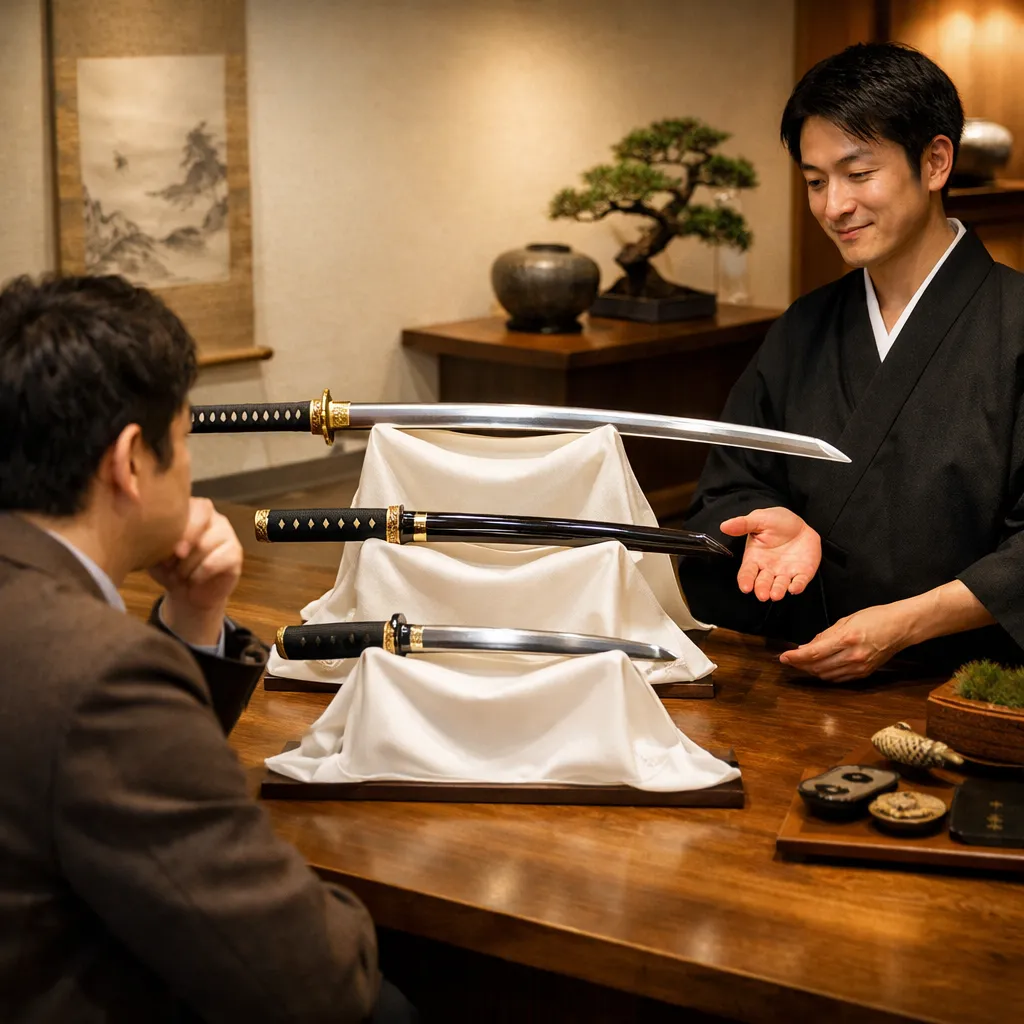
Which Japanese sword should you choose?
This is often the first question people ask once they become interested in Japanese swords.
Yet before choosing between katana, wakizashi, or tanto, there is a more important question:
why do you want to own one?
A Japanese sword is not simply a product. It is an object that embodies culture, aesthetics, and time. Understanding how to choose the right sword can dramatically change the depth of satisfaction you feel after owning it.
Last updated: January 2026 | This article focuses on aesthetics and ownership perspective. Legal and import requirements vary by country and should be confirmed separately.
- There is no single “correct” Japanese sword—choice depends on personal values and space
- Katana emphasizes presence and symbolism
- Wakizashi appeals to subtlety and intimacy
- Tanto represents minimalism and concentrated beauty
- Choosing thoughtfully matters more than choosing quickly
Why There Is No Single “Correct” Choice
Many purchases are guided by clear criteria—price, specifications, brand reputation. Japanese swords do not follow this logic.
Their value lies in how deeply they resonate with your own sense of beauty and intention. This is why choosing a Japanese sword feels less like shopping and more like making an aesthetic commitment.
The First Decision Is Not the Sword Type
Many people begin by asking whether they should choose a katana, wakizashi, or tanto. Yet the more important questions come first.
- Where will the sword be placed, and how will you interact with it?
- What emotions do you want it to evoke?
- Is this a short-term fascination or a long-term relationship?
When these questions are answered honestly, the appropriate sword often reveals itself naturally.
The Aesthetic of Choosing a Katana
The katana is the most iconic of all Japanese swords. Its length, curvature, and balance give it a commanding presence. A single katana can function as the visual axis of a room.
Those who choose a katana often value symbolism and clarity. Whether displayed in a gallery-like space or a refined interior, a katana defines its surroundings rather than blending into them.
The Quiet Appeal of Wakizashi
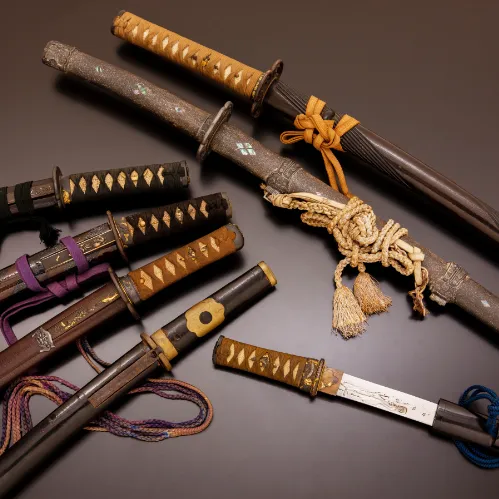
Wakizashi does not seek to dominate attention. Its shorter length and restrained form create a sense of refinement and intimacy.
Those drawn to wakizashi tend to appreciate subtlety. It is not meant to impress from a distance, but to be discovered gradually through close observation.
Why Choosing a Tanto Is a Deliberate Decision
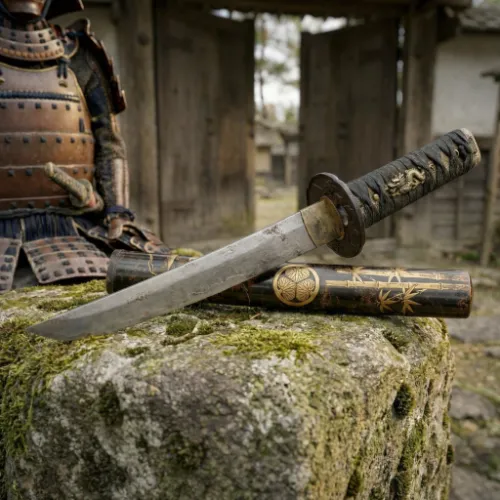
Tanto is the smallest of the three, but it is not an entry-level option. Its compact form concentrates tension, balance, and beauty into a minimal space.
Those who choose a tanto often value restraint and essence. In modern interiors, a tanto can convey quiet strength with remarkable clarity.
Your First Sword Is a Beginning
Choosing a Japanese sword is not about finding the perfect piece immediately. The first sword is an entry point, not a conclusion.
A thoughtfully chosen sword teaches you what to appreciate next. Taking time to choose is already part of the ownership experience.
Choosing Is Where the Value Begins
Selecting a Japanese sword is an act of self-reflection. It reveals what you value, what kind of beauty resonates with you, and how you wish to live with meaningful objects.
A sword chosen with intention becomes more than a possession. It becomes a reflection of your aesthetic values. If you feel uncertain about which sword to choose, that uncertainty is not a weakness—it is a sign of genuine engagement.

No comments yet.