
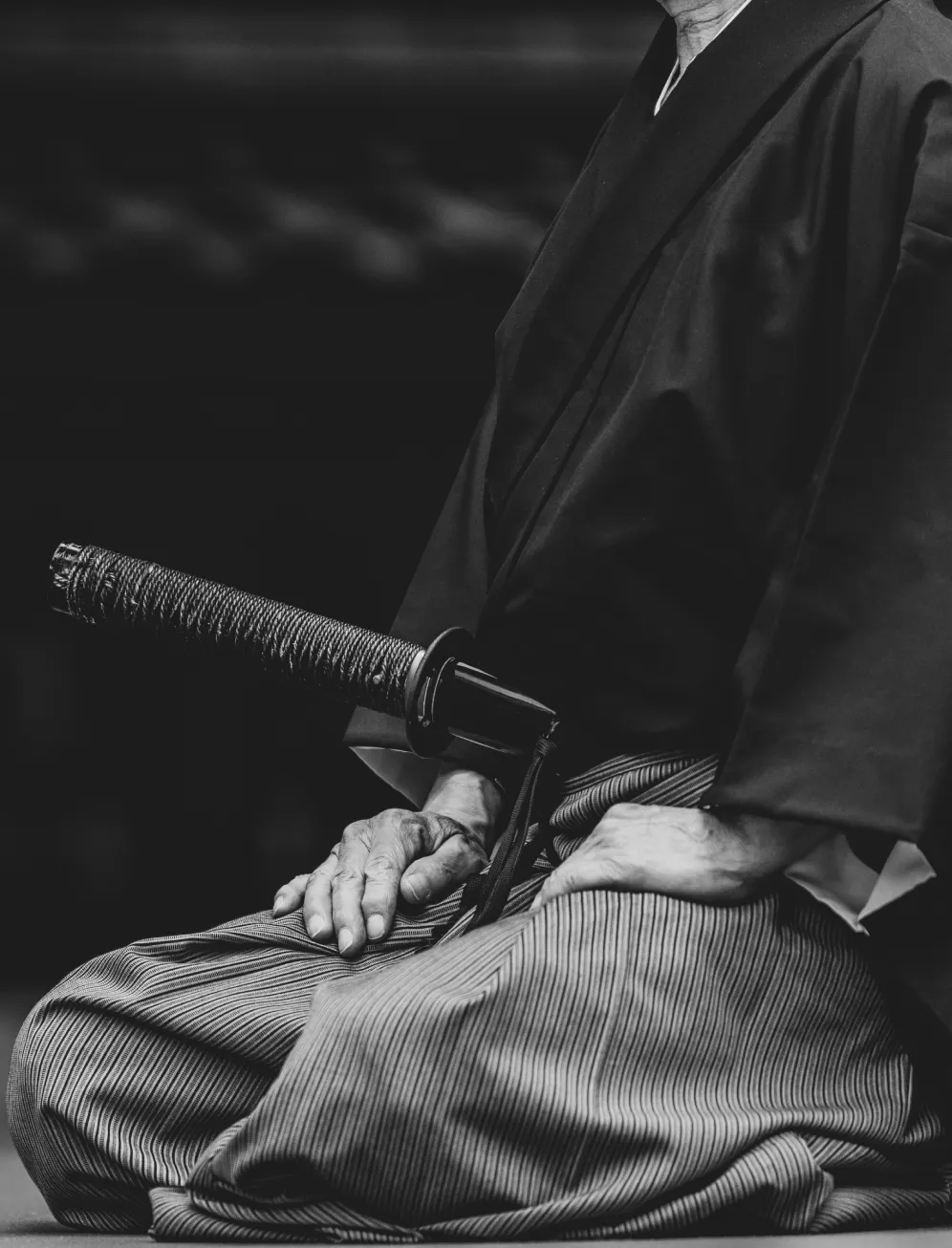

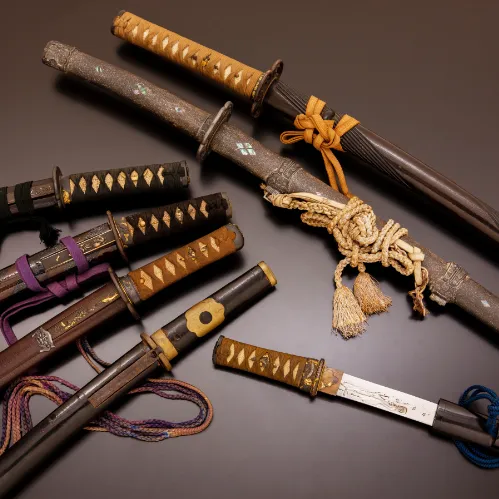
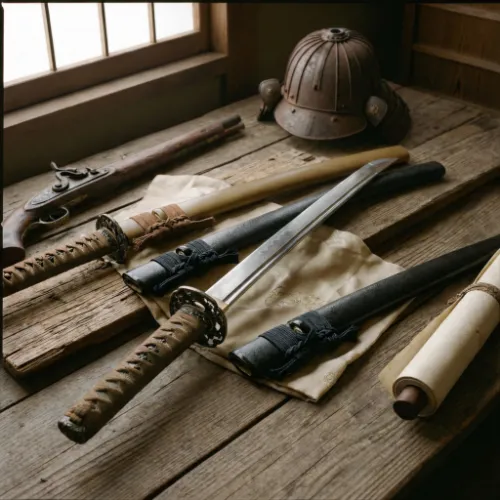
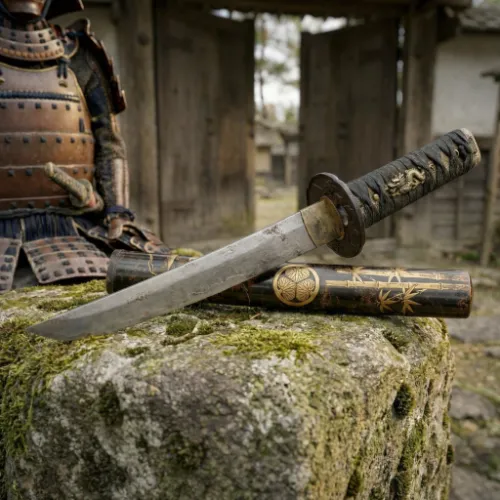

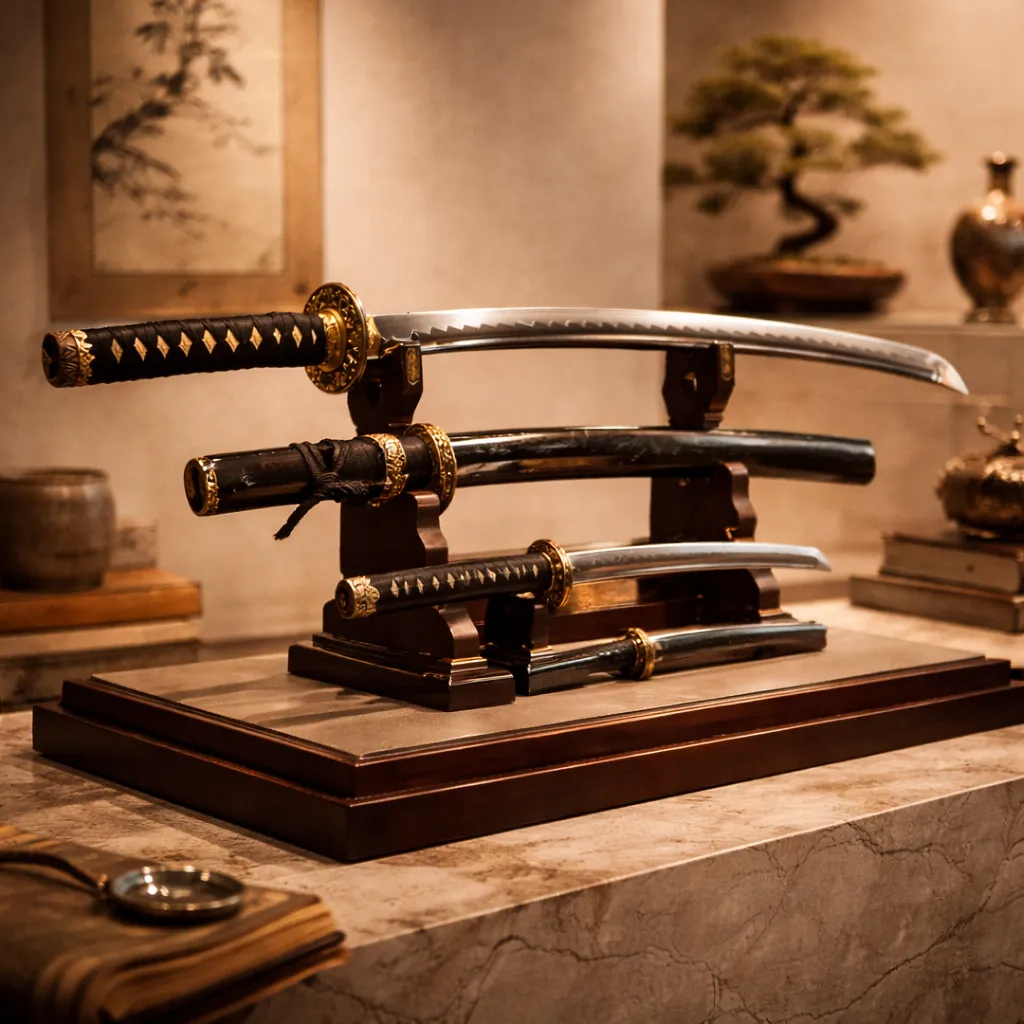
When people think of Japanese swords, the first image that often comes to mind is the katana.
However, Japanese sword culture was never built around a single blade alone.
Historically, three distinct types of swords coexisted—each with a clear role and meaning:
katana, wakizashi, and tanto.
These were not simply different sizes of the same weapon.
Each reflected specific situations, social structures, and cultural values of its time.
In this article, we explore the differences between katana, wakizashi, and tanto
not only by shape and length, but through their historical roles and cultural context.
Last updated: January 2026 | This article provides general historical and cultural information. For legal regulations or import requirements, please consult official sources in your country.
- Katana: The primary sword of the samurai, symbolizing status and public identity
- Wakizashi: A companion blade for daily use and close-quarters situations
- Tanto: A compact blade associated with personal defense, ritual, and refinement
- The differences reflect where, how, and by whom each sword was used
- 1. At a glance: Key differences between katana, wakizashi, and tanto
- 2. What is a katana? The core symbol of the samurai
- 3. What is a wakizashi? The everyday companion blade
- 4. What is a tanto? The most personal and intimate blade
- 5. Why these three blades coexisted
- 6. How they are valued today
- 7. Summary
- Glossary & historical notes
1. At a glance: Key differences between katana, wakizashi, and tanto
These three types of swords are often categorized by blade length, but length alone does not explain their true significance. The essential difference lies in who carried them, where they were used, and for what purpose.
- Katana: Used primarily in public or outdoor settings; a symbol of samurai authority
- Wakizashi: Used indoors or in confined spaces; carried as a secondary blade
- Tanto: Used for personal defense, ritual, and close personal situations
2. What is a katana? The core symbol of the samurai
A katana is generally defined as a Japanese sword with a blade length of two shaku or more—approximately 60 cm (about 24 inches). Its curved blade, single edge, and two-handed grip made it highly effective for cutting and mobility in combat.
2-1. The katana as a battlefield weapon
From the late Heian period through the Kamakura period, Japanese warfare shifted toward mounted combat and close-quarters fighting. Straight swords evolved into curved blades, forming the foundation of the katana. During the Sengoku period, the katana was a true battlefield weapon— valued for durability, sharpness, and reliability.
2-2. From weapon to symbol
With the arrival of long-term peace during the Edo period, the katana gradually lost its role as a practical weapon. Instead, it became a symbol of samurai identity, discipline, and moral responsibility. The phrase “the sword is the soul of the samurai” emerged during this era.
3. What is a wakizashi? The everyday companion blade
A wakizashi has a blade length between one and two shaku—approximately 30–60 cm (12–24 inches). Positioned between the katana and the tanto in size, it offered excellent handling in confined spaces.
3-1. The daisho: katana and wakizashi together
During the Edo period, samurai were permitted to wear a matched pair of swords known as the daisho—a katana and a wakizashi. While the katana represented public authority, the wakizashi served practical functions indoors and at close range.
3-2. A blade beyond class boundaries
Unlike the katana, wakizashi were sometimes permitted to non-samurai classes under specific circumstances. This suggests that wakizashi were viewed as closer to daily life— blending practicality with social function.
4. What is a tanto? The most personal and intimate blade
A tanto is defined as a Japanese blade with a length under one shaku—less than 30 cm (under 12 inches). Compact and discreet, it was easy to carry and quick to draw.
4-1. Personal defense and ritual
Tanto were commonly used for personal defense rather than battlefield combat. Historically, women of the samurai class often carried tanto for protection, symbolizing dignity, resolve, and self-respect.
4-2. Concentrated craftsmanship
Due to their small size, tanto often showcase extremely refined craftsmanship. Details such as the grain of the steel and the temper line are condensed, making many tanto highly prized as art objects.
5. Why these three blades coexisted
Katana, wakizashi, and tanto were not redundant tools. Each was designed for a specific context:
- Katana: Public space, authority, symbolism
- Wakizashi: Daily life, practicality, backup
- Tanto: Private space, personal defense, ritual
This structure reflects how Japanese society carefully distinguished between public and private behavior, and how tools were adapted to social roles.
6. How they are valued today
Today, none of these blades serve their original combat roles. Instead, they are appreciated as cultural artifacts and works of art.
- Katana: Presence, symbolism, display impact
- Wakizashi: Historical nuance, collector depth
- Tanto: Precision, craftsmanship, rarity
For international collectors, understanding these distinctions represents a deeper appreciation of Japanese culture itself.
7. Summary
Katana, wakizashi, and tanto together form a layered cultural system. Their differences reveal not only how swords were used, but how Japanese society understood space, status, and responsibility.
Japanese swords are not merely weapons. They are reflections of history, philosophy, and human intention— and understanding their differences is the first step toward understanding their true value.
Glossary & historical notes
- Shaku: A traditional Japanese unit of length. One shaku ≈ 30 cm (≈ 12 inches).
- Heian period (794–1185): An era when Japanese culture matured and the samurai class began to rise.
- Kamakura period (1185–1333): The first samurai-led government; practical combat experience refined sword design.
- Sengoku period (15th–16th century): A time of constant warfare that drove mass sword production.
- Edo period (1603–1868): A long peaceful era when swords became symbols of status and ethics.
- Daisho: The paired wearing of katana and wakizashi, representing samurai status.
- Hamon: The temper line visible on a blade, created during heat treatment.
- Jihada: The surface grain of the steel, revealing forging techniques.
- Koshirae: The external fittings of a sword, including scabbard, handle, and guard.

No comments yet.